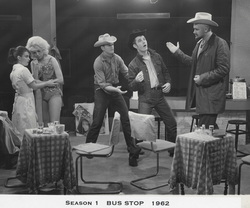
Originally created as part of Mayor Grady's Stage Crafters' Project within the Parks and Recreation Department in 1958, Spotlighters was born when the program ended in 1962. For more than 37 years the theatre flourished under the leadership and artistic vision of Audrey Herman. Ms. Herman's program of presenting a new show every month allowed for a wide variety of productions and many opportunities for directors, designers and actors to experience Spotlighters' intimate setting.
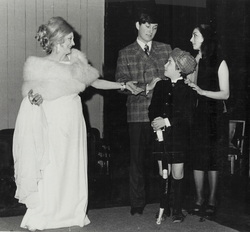
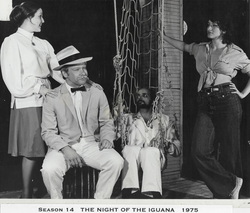
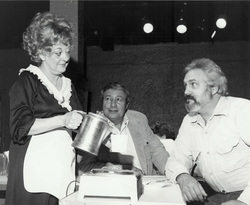
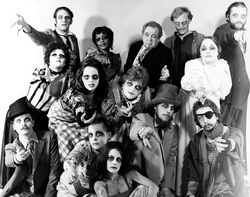
To provide exceptional, diverse, creative, bold, and affordable theatrical productions, which stimulate and entertain both audience and artists. Spotlighters strives to increase and enhance the Baltimore community's appreciation for, and participation in, the experience that is live theater.
1958: Began as part of the city’s recreation department program (“Mayor Grady’s Stage Crafters Project”) under the Parks & Recreation Department.
July 1961: Mayor ended Parks & Recreation Program .
July, 1962: Transitioned from the city-run program to become a private enterprise theatre at 817 St. Paul Street, Baltimore, launching with the production of Bus Stop, Oct 12, 1962
1962–1999: Under the leadership of Audrey Herman, the theatre produced approximately one show per month, providing opportunities for local actors, directors and designers. Including a Summer Theatre program, performing outdoors on "The Barge" in White Marsh ...
October 1974: Initiated a children’s program (“Great Gobbs of Greasy Grimm’s Fairy Tales”) as part of its outreach.
1999: Audrey Herman passed away; The Spotlighters continued operating with Audrey's cadre of dedicated volunteers.
July 2000–Dec 2004: Spotlighters operated under the leadership of Robert Russell and Jonathan Claiborne to continue Audrey's vision - operated as The Audrey Herman Spotlighters Theatre,
Nov 2004 - the theatre began its formal transition into an IRS-recognized 501(c)(3) non-profit organisation.
2005 onward: Began a series of capital-improvement efforts (building renovations, accessibility upgrades) to modernize the facility and improve patron experience.
To provide exceptional, diverse, creative, bold, and affordable theatrical productions, which stimulate and entertain both audience and artists. Spotlighters strives to increase and enhance the Baltimore community's appreciation for, and participation in, the experience that is live theater.
At Spotlighters Theatre, we believe great art begins with respect, collaboration, and care for one another. Our community thrives on these core values:
Respect – We honor every individual’s voice, background, and contribution.
Inclusion – We celebrate diversity and welcome everyone to share in the joy of theatre.
Integrity – We act with honesty, transparency, and dedication in all that we do.
Safety – We create spaces where artists and audiences alike can feel secure and supported.
Equity – We strive for fairness and representation, both on stage and behind the scenes.
Consent – We value open communication and mutual trust in all creative work.
Accountability – We take responsibility for our words and actions, learning and growing together.
Professionalism – We approach our art with passion, discipline, and respect for the craft.
Community – We nurture a welcoming environment where everyone feels they belong.

The Spotlighters' tiny theater-in-the-round is reached via a short corridor, the walls of which are lined with positive reviews. The Spots have received many a thumbs-up notice in their 37 years, but theater president and founder Audrey Herman was particularly fond of the words a News-American critic had for her stage, and they have been blown up and tacked above all the rest. The critic wrote: "Those Spotlighters will tackle anything."
Herman died of cancer Dec. 4 at the age of 74. Her tackle-anything attitude and boundless love of the dramatic arts cut a wide, decade-spanning swath through Baltimore's theatrical world. The diminutive woman known for her mane of blond hair and armloads of rattling bracelets touched innumerable lives as an actress, director, producer, and beloved matriarch of local theater.
"She was a great lady, warm, caring, and with great love for theater," says Shirley Bell, a 40-year friend of Herman's who handles publicity for the Spotlighters. "It boggles my mind what the Spotlighters were able to do. They staged 12 shows a year, every year. But that was just Audrey and her vision and determination."
Born and raised in Baltimore, Herman first mounted the boards in an elementary school production of Rebecca of Sunnybrook Farm. While she ultimately passed up her chance to leave town to study acting, her love of the footlights never wavered. She became involved with Spotlighters in the '50s, when it was a city-run program. When Mayor Harold Grady axed the theater's budget in 1962, Herman led the charge to make the theater a private, nonprofit venture. Armed with $600 in capital, she was instrumental in carving a cozy, 100-seat theater out of a frumpy storeroom beneath a Mount Vernon apartment building, which remains the Spots' home. Fueled by Herman's ceaseless energy, the plucky theater flourished, even with the grueling, production-a-month schedule she implemented.
While Herman frequently wowed them onstage herself, colleagues have called her "a dynamite actress" and "a roaring talent", she also nurtured and encouraged the talents of others. "She was an extremely generous person," says Walter Hudson, a veteran Spotlighters volunteer. "In addition to being a fine actress, she gave many people the opportunity to act, direct, and produce. It was what she was all about." Herman clearly had a keen eye for talent. The late film and TV performer Howard Rollins began his acting career under her tutelage, as did Obie-winning actor/playwright David Drake. Local actor/director Miriam Bazensky began her long Spotlighters association with a small part in the theater's 1978 production of Fiddler on the Roof. "What I really wanted to do was direct, and Audrey was willing to give me a chance," says Bazensky, who ultimately directed about a dozen plays at the Spots. "Even if you failed, you never got an, 'I told you so' hanging over your head. Audrey would just say, 'Oh hon, let's try something else.'"
"She gave many, many people the chance to cross over from acting to directing," says Sharon Weaver, who's been involved with the Spots as an actor/director since 1972. (She met her husband on its stage.) "If you went to her with a project, she would always find a way to fit it in to her schedule. Just about everybody in local theater has worked her stage." Herman's "open-boards" policy, which welcomed one and all, extended beyond who could direct and perform to what they could perform.
It would be easy for a small, underfunded community theater to rely on a steady diet of dramatic warhorses and evergreen crowd pleasers; but her Spots would tackle anything. They did West Side Story and the drag-queen farce Vampire Lesbians of Sodom. They did Come Back Little Sheba and Equus, the latter complete with nudity. The theater's postage-stamp-size, 13-foot-by-13-foot stage was no obstacle to Herman, who produced razzle-dazzle musicals with more than 40 singers and dancers. "It was quite daring for a community theater to produce such a variety of shows," Bell says. "Audrey was very brave. Ultimately, what she did was bring in a lot of new audience members, people who might not have otherwise come to the theater."
In 1995, Herman was named a City Paper "Unsung Hero" in the paper's first annual salute to Baltimoreans whose deeds improve the city. In the article, she described how there were "many, many times" she didn't know if the Spotlighters would be able to pay their rent and keep the lights on. But a way was always found, and the curtain always rose.
And so it remains now, as the Spots are poised to carry on without Herman at the helm. Before her death from the cancer she battled for some time, her husband of 48 years, Bill Herman, stated his commitment to continue the Spotlighters. A host of local theater people have likewise pledged their support for the stage. The theater already has most of next year's season mapped out, starting in January with the Baltimore premiere of off-Broadway's The Blue Room, a challenging, contemporary drama Herman was determined to get for her stage. "Every theater has to have someone as its backbone, and Audrey was the Spotlighters' backbone," Bell says. "Hers are very hard shoes to fill, but we're going to try. It would be a real crime if we didn't."
And so the show goes on. You can bet that the pint-size woman with the big heart, who was buried with a script in her hand, wouldn't want it any other way.
Our Mission: To provide exceptional, creative, diverse, and affordable theatrical productions, which stimulate and entertain both audience and artist. Spotlighters strives to increase and enhance the Baltimore community's appreciation for, and participation in, the experience that is live theatre.

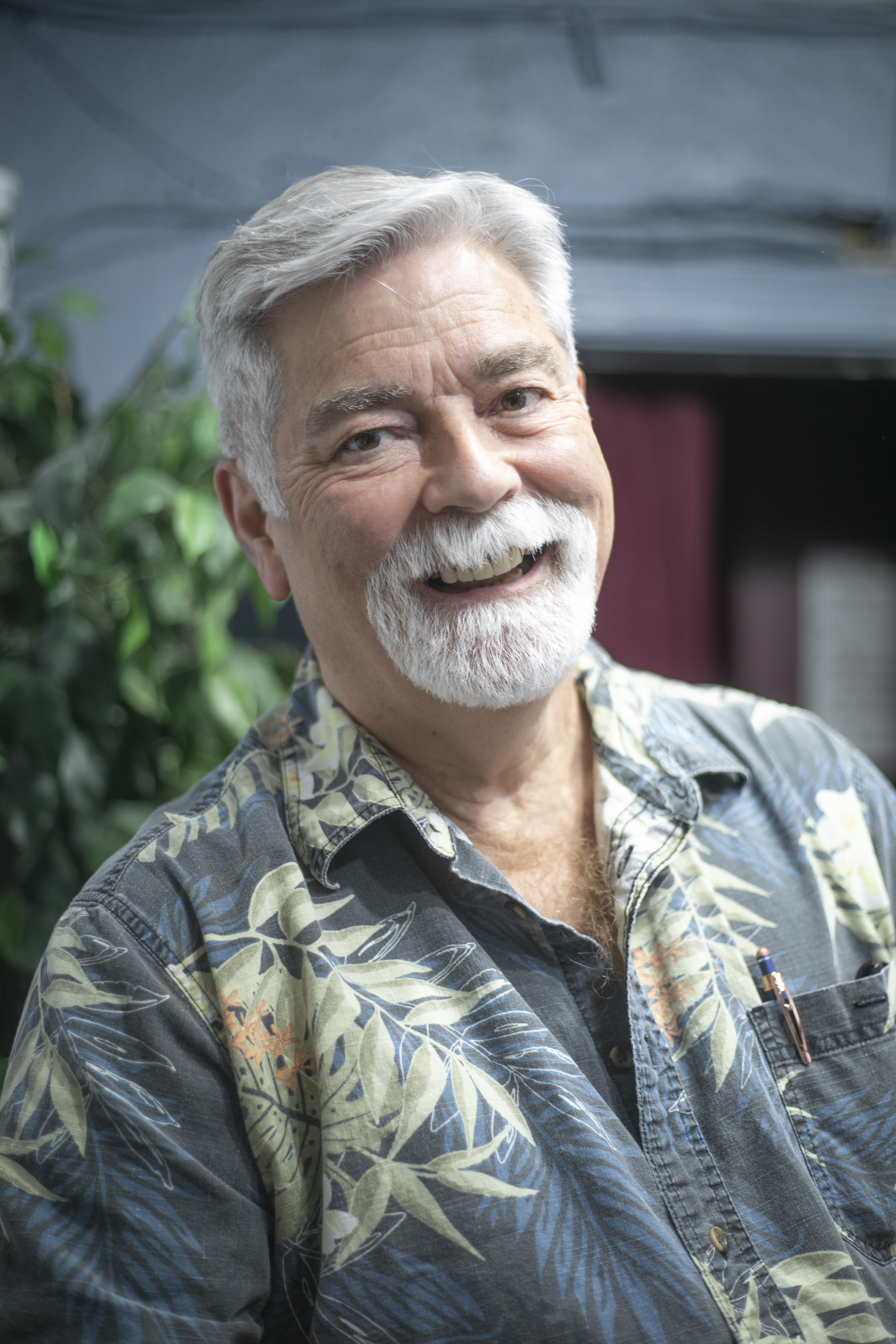

![[team]](https://cdn.prod.website-files.com/685596763546b63d737e4852/6879661991050979821cc053_d24e621fbf229d4fbeebd591cce9acc4_Sharon%20Brown.jpg)
We would like to extend our thanks love and appreciation to Sharon Carter Brown, 2025-2026 Board President who has joined the short and distinguished list of Past Presidents of the Audrey Herman Spotlighters Theatre.
What our community says
Hear from the people who make our theatre a home—artists, audience members, and friends who’ve experienced the magic of live performance in our intimate space. Their words inspire us to keep creating, connecting, and welcoming new voices.
![[headshot] image of customer (for a construction company)](https://cdn.prod.website-files.com/685596763546b63d737e4852/690223adfb4e268ffa2a2c94_19970927%20wedding%20day.jpg)
"The first date I had with my wife was when she came to see me in a play at Spotlighters (Curse of the Starving Class, dir. Barry Feinstein). She had told her mother before the date that if I couldn't act, she couldn't go out with me"
![[headshot] image of customer (for a maritime service)](https://cdn.prod.website-files.com/685596763546b63d737e4852/6902429c87e530d5ba6e1024_86352140_10221656113060291_422543087353462784_n.jpeg)
“One of my favorite productions at Spots! Directed by the late Sharon Weaver, the play was challenging and meaningful!”